Think Spring!!!!

This is not simply a brazen attempt to avoid writing another Tips column until 2011; it's recognition of the fact that a having beautiful garden next season begins with planning in this one. Let's look at a couple of examples:

1. Bulbs
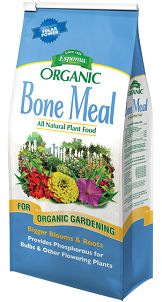
Few crops are as easy to grow as spring flowering bulbs- tulips, daffodils, hyacinths and the like. Any should be planted at a depth equal to three times their diameter, but deeper or more shallow will work too. All like a bit of bone meal added to the planting hole, but it isn't essential. They can even be planted any time until the ground freezes. About all they demand is a mostly sunny spot.
Told you it was easy.

2. Pansies
are best known as early season annuals. Many gardeners still don't realize how much better they perform when planted not in the spring, but in the fall! Here's how it works: the fall planted pansy takes advantage of the season's cool air and warm soil to build a strong root system. Once cool turns to cold and the snow flies they seem to regress (though you may be rewarded with an occasional flower peeking out from a winter thaw). As weather warms in the spring, that vigorous root system encourages strong top growth and thus blooming not seen in their spring planted brethren. It's important to note that this won't work with last spring's survivors, which are usually too stressed from the summer's heat to survive the winter.
If you've never tried planting pansies in the fall, let this be the year.

In the meantime: many annuals will thrive until frost and beyond. Often a pruning and a feeding or two with a water-soluble fertilizer is all they need  to get a new lease on life. This is especially true of the vegetative (cutting-grown) annuals like petunias, calibrachoa and verbena often used in hanging baskets.

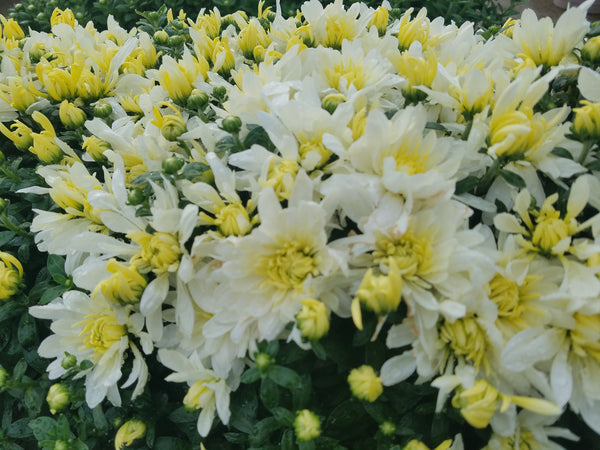
Mums
We often get questions about how to get hardy mums to overwinter. The reality is that fall mums (with some exceptions, like Ball's Mammoth Mum, which is rumored hardy to -30 degrees) aren't really that hardy. Most knowledgeable retailers, in fact, have abandoned the term "hardy mums" to reflect this reality. Planting early, planting in a sheltered area (southern exposure, next to a building's foundation, etc.) mulching and not pruning off dead top growth will all improve your chances to some extent.